
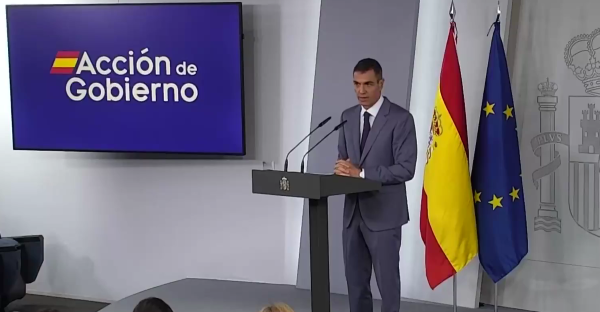
On Tuesday, the Spanish government enacted urgent measures to address the ongoing housing crisis, following significant unrest in Barcelona the previous evening. Tens of thousands took to the streets in search of a prompt resolution. The demonstrations were initiated by nationwide protests over the weekend, which were sparked by the eviction of 87-year-old María del Carmen Abascal from her home in Madrid last month.
The approved measures are similar to those Parliament rejected the prior week. Prime Minister Pedro Sánchez‘s coalition government lacks a majority and suffered a major legislative setback when conservative and far-right opposition parties voted against emergency decrees designed to mitigate the housing crisis. In light of this, the Prime Minister has called for early elections on 29 November.
The 21 measures approved include provisions to facilitate the renting or purchase of homes, extend eviction protections for vulnerable residents, regulate room rentals, implement a new tax on seasonal rentals, prohibit speculative real estate transactions, and offer tax incentives to property owners and tenants who pay on time.
Prime Minister Sánchez remarked, “We will not permit any further evictions like the one Maricarmen suffered or those that have occurred since the decrees were repealed,” during a press conference at the Presidential Palace.
Furthermore, the government plans to establish a €10 billion fund to provide loans of up to €50,000 for first-time homebuyers, along with subsidies for construction. These actions require ratification by an interim legislature, as the regular Parliament was dissolved after the announcement of the upcoming elections. The interim body has 69 members, compared with the usual 350 in Parliament. The coalition will need at least 35 votes to pass these measures.
The Prime Minister also sought support from opposing members, saying, “We are not discussing an ideological issue; this is a matter of common sense.” He emphasised the necessity of addressing the needs of many Spaniards, stating, “It is not just those gathering in town squares or the thousands demonstrating in the streets who are waiting for solutions; it is millions of citizens who expect their representatives to demonstrate the courage to confront powerful interests rather than acquiescing to them.”
Professor Alejandro Quiroga from Madrid’s Complutense University commented on the situation, noting that obtaining approval for these decrees through the interim legislature is a constitutional requirement and a politically prudent decision by Sánchez.
He remarked, “I do not believe Sánchez had an alternative. If he is calling for early elections to maintain public focus on housing, he cannot afford to remain inactive. That would not be a prudent course of action.”
As rising costs and a housing shortage increasingly exclude many Spaniards from the housing market, there remains a pressing need for stronger tenant protections, measures to combat fraud, and a ban on evictions when alternative housing is not available.
This article used information from The Associated Press.
