
Poland has attributed an arson attack on a Starlink satellite station in September to Russian involvement. In relation to this incident, authorities have arrested two Turkish citizens, whose names have not been disclosed in accordance with Polish privacy regulations. These individuals were apprehended in Germany and are accused of deliberately igniting a fire at the Starlink infrastructure on 23 September in Wola Krobowska, approximately 40 kilometres south of Warsaw.
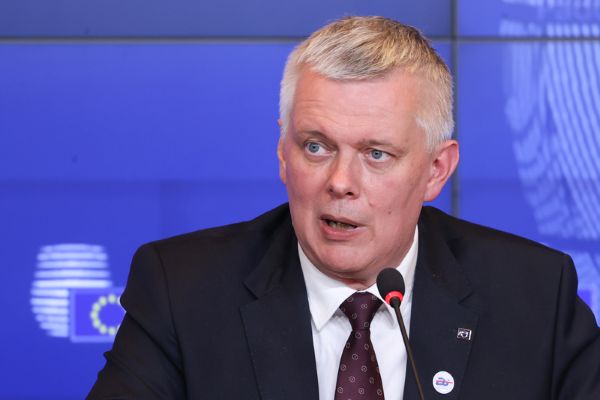
Tomasz Siemoniak, the Polish minister responsible for intelligence services, said in a recent news release, “We have no doubt that Russian intelligence services are behind this act of sabotage,” and noted that these agencies are increasingly recruiting individuals with ties to the criminal underworld. Polish Prime Minister Donald Tusk referred to the incident as “another act of hybrid warfare” in a post on X. “On behalf of Polish services, German police detained two Turkish citizens suspected of setting fire to a Starlink station in Masovia. This is another act of hybrid warfare. The perpetrators of the sabotage will answer before the Polish justice system.” No additional details about the incident have been released yet.
This incident is part of a larger pattern of over 210 occurrences of sabotage and malign activities linked to Russia across Europe since the beginning of Moscow’s invasion of Ukraine in February 2022. Notably, a British court last year found three individuals guilty of arson in a March 2024 scheme targeting a London warehouse containing Starlink devices intended for Ukraine. British prosecutors have linked this operation to Russian intelligence efforts.
Officials indicate that one objective of these attacks is to undermine support for Ukraine, instigate fear and discord within European societies, and deplete investigative resources. Russia frequently employs proxies for these activities, and some involved individuals remain unaware of their connections to Moscow.
Elon Musk, the founder of Starlink, has allowed Ukrainian forces to use the satellite communications system within their territory, including in areas occupied by Russia; however, access to the system within Russia has been restricted. Starlink has become a vital asset for Ukraine’s military operations, enabling commanders and personnel to maintain effective communication and coordination.
Polish minister: Ukraine’s allies are facing near-constant Russian subversion
Russia’s intelligence services are reportedly engaged in almost daily acts of subversion, as noted by Siemoniak during a security conference in Warsaw. He said there isn’t a week without such activities, a trend that extends to other European nations as well. These efforts appear to target countries supportive of Ukraine.
Siemoniak highlighted that Russia’s covert operations in Poland commenced in early 2024, involving the recruitment of temporary agents through platforms such as Telegram to execute various attacks, including one against a shopping centre. He remarked, “Our adversary—namely, Russia’s intelligence services—continuously evolves its methods and operates with considerable resources at its disposal.”
He further elaborated that countering Russia’s intelligence services differs significantly from dismantling an organised crime group, where a conviction can resolve the case. In contrast, the fluid nature of subversive activities means neutralising one element often leads to another emerging, with unpredictable outcomes.
Beate Gangås, the Director-General of Norway’s Police Security Service, supported this perspective by stating, “In instances of subversive activity, it resembles the scenario of a dragon that continues to grow new heads. The direction of their next actions remains uncertain.”
She concluded by emphasising the gravity of the current situation, declaring, “We find ourselves in the most serious circumstances since the Second World War.”
This article used information from The Associated Press.
