
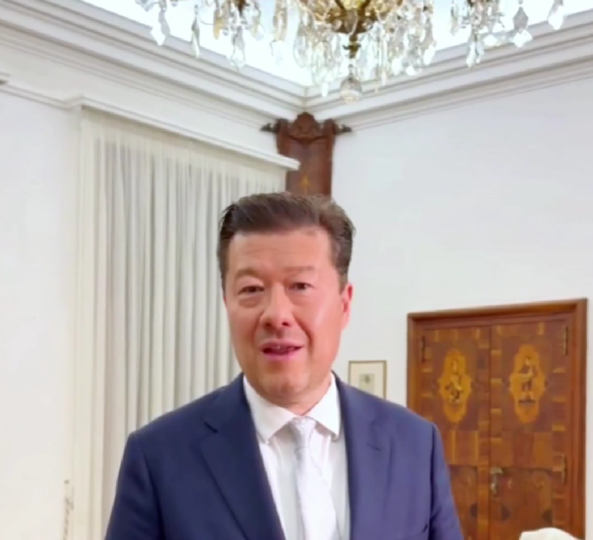
In November, eleven European armies are scheduled to participate in training exercises in Poland. However, the Czech Republic has announced that it will not take part in this initiative. Additionally, the Czech government has prohibited the military orchestra from engaging in activities in Ukraine. Consequently, Czech soldiers will not be involved in the exercise known as Koalicja 26.2, which aims to train these European armies to sustain peace in Ukraine after Russian aggression ends, without the involvement of American troops.
Aktuálně.cz and the Economic Daily reported this information, highlighting statements from Tomio Okamura, chairman of the right-wing extremist Freedom and Direct Democracy (SPD) party and head of the Chamber of Deputies. In a statement shared on social media after a coalition council meeting, Okamura confirmed that the government coalition has reached a consensus on not allowing Czech soldiers to participate in exercises supporting Ukraine or engage in military operations within the country.
In a video statement, Okamura emphasised, “We will not deploy Czech soldiers from Czech families to address the conflict between Ukraine and Russia.”
Also, a coalition council meeting three weeks earlier decided not to dispatch the military orchestra to events in Ukraine.
The SPD is one of the coalition partners alongside the far-right ANO party, led by Prime Minister Andrej Babiš. This coalition government was formed after the October 2025 elections, in collaboration with another far-right party, the Motorists for Themselves, as well as the extremist SPD.
While all three government partners share a pro-Russian stance, the SPD holds the most extreme position regarding Ukraine. Okamura has advocated for the expulsion of a significant number of the 380,000 Ukrainian refugees currently residing in the Czech Republic.
Undermining defence capabilities
Babiš has shifted away from the traditional Czech foreign policy of support for Ukraine and has rejected various EU policies. His administration has also neglected the Czech Republic’s defence requirements, resulting in cuts to defence spending in the budget. This has undermined the country’s defence capabilities and led to a cessation of support for Ukraine.
MEP Alexandr Vondra, deputy chairman of the opposition Civic Democratic Party (ODS), expressed concern in February about the potential repercussions of the government’s actions on the Czech Republic’s defence capabilities. He has criticised the administration for using foreign policy to navigate domestic political conflicts, saying such rhetoric diminishes the country’s standing in the international arena. Vondra specifically condemned Babiš’s decision to withhold economic aid to Ukraine, arguing that it aligns the Czech Republic with Hungary, under the leadership of then-Prime Minister Viktor Orbán, and Slovakia in a regrettable way.
As reported by Aktuálně.cz, the United Kingdom and France are currently organising military exercises in Poland, focusing on the logistics needed for future deployments. The primary aim of these exercises is to restore and enhance the capabilities of the Ukrainian armed forces, ensuring that they are adequately prepared to deter potential future aggression from Russia and, if necessary, to defend against it.
The British Ministry of Defence anticipates the involvement of nearly 5,000 soldiers from Poland, Spain, Turkey, Sweden, Belgium, the Netherlands, and Germany in these important exercises.
