
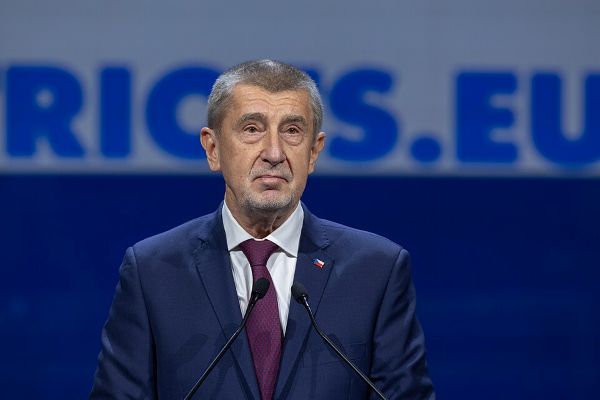
Andrej Babiš, the far-right Czech billionaire, was officially sworn in as the new Prime Minister of the Czech Republic on Tuesday. This marks Babiš’s return to a leadership role, having previously served as Prime Minister from 2017 to 2021. In his inaugural address, he pledged to advocate for the interests of the Czech people, both domestically and internationally, and to aspire to establish the Czech Republic as “the best place for life on earth.”
President Petr Pavel swore in Babiš, who was invited to form a new government after his ANO (or YES) party narrowly won the October 3-4 elections. In collaboration with two smaller political parties—the right extremist Freedom and Direct Democracy (SPD) and the far-right Motorists for Themselves—Babiš is set to establish a majority coalition government. The proposed Cabinet will consist of 16 members, with ANO securing eight positions, including the Prime Minister’s role. The coalition arrangement allocates four positions to the Motorists and three to the SPD, representing a combined total of 108 seats in the 200-member lower house of parliament. This shift in the country’s political life has placed the four democratic parties of the pro-Western government led by Prime Minister Petr Fiala in the opposition.
While the specific timeline for the appointment of the Cabinet remains uncertain, the new coalition is expected to modify current government policies, align with Hungary and Slovakia, cut aid to Ukraine, and approach Russia and the US in their efforts to destabilise the EU and its member states. Members of the coalition have repeatedly criticised the core of EU values and policies, often using disinformation tactics.
It is important to note that Babiš, aged 71, is currently facing fraud charges linked to allegations of EU subsidy fraud. As a prerequisite for legal proceedings, the new parliament will need to lift his official immunity. After his defeat in the 2021 parliamentary elections, Babiš was also unsuccessful in a bid for the largely ceremonial presidency against President Pavel, a retired army general.
Babiš’s appointment followed his commitment to divest from his major business interests in order to mitigate any potential conflicts of interest that may arise from his political engagements. He oversees approximately 200 companies within the Agrofert conglomerate. Babiš stated that Agrofert will be managed in a trust fund by an independent trustee, under the supervision of an independent protector until his passing, at which point his descendants will inherit the assets. Additionally, he owns a network of clinics and laboratories, and a close ally from the ANO party has been proposed as a candidate for the position of health minister in the new administration.
This article used information from The Associated Press.
