
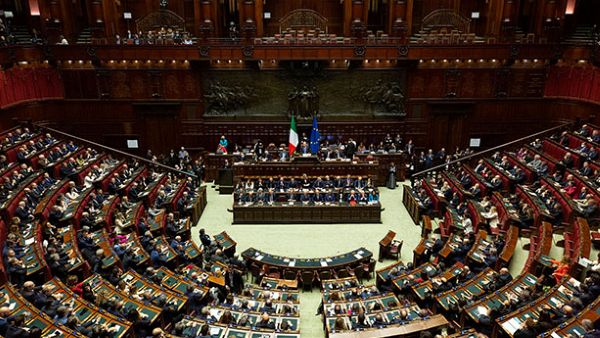
Italy’s parliament granted final approval on Thursday to a comprehensive electoral reform, a significant political achievement for Premier Giorgia Meloni. This legislation is expected to prompt a constitutional challenge. Supporters have called the new law “Stabilicum,” while opponents have labelled it “Melonellum.”
The reform is seen as an attempt to strengthen Italy’s political framework and improve the electoral prospects of the coalition, between two far-right parties and a centrist party, led by Meloni, which recently became Italy’s longest-serving government since World War II.
Proponents argue the new law will produce clearer electoral outcomes and more stable governance in a country known for frequent government changes. Conversely, the centre-left opposition has denounced the reform as a “scam law,” arguing that it is unconstitutional. They have announced their intention to challenge the measure in Italy’s Constitutional Court once it takes effect.
The Chamber of Deputies approved the legislation by secret ballot, with 227 votes in favour and 164 against, giving it definitive parliamentary endorsement after extensive debate. Premier Meloni praised the reform as a step forward in expanding voter choice, saying, “Italians will be able to vote for a party, coalition, governing programme, prime ministerial candidate, and once again, their own lawmakers.”
A key feature of the reform is a majority prize that awards bonus parliamentary seats in both chambers to the winning pre-election alliance, provided it achieves at least 42% of the national vote. Critics contend that this “majority prize” could distort voter representation and may conflict with prior judicial rulings that invalidated certain elements of existing electoral laws. A successful legal challenge could necessitate revisions to the system before the next general elections.
The new legislation abolishes Italy’s current mixed electoral system—where approximately one-third of parliamentary seats are filled through first-past-the-post constituencies—and replaces it with a fully proportional system. Supporters of the coalition argue that these changes will help voters identify a governing coalition before elections and reduce the post-election negotiations that have historically led to fragile governments. To qualify for the majority prize, parties must agree on a common prime ministerial candidate and political platform before the election.
This reform also creates added pressure on the divided centre-left opposition, as rifts between the Democratic Party and the populist Five-Star Movement complicate efforts to form a unified alliance capable of challenging the government in the upcoming elections.
Premier Meloni emphasised the importance of coalition unity on the vote on this electoral law, warning members of her Brothers of Italy party, along with coalition partners Forza Italia and the League, that failing to pass the reform could trigger a government crisis.
Resistance has also emerged within Meloni’s own coalition. Some lawmakers worry the reform may backfire, as growing support for former General Roberto Vannacci‘s right-wing extremist National Future party could divert votes from the governing coalition, undermining its ability to reach the 42% threshold for the majority bonus.
Additionally, critics point to provisions that could raise campaign costs for individual candidates and reduce women’s representation in parliament. This vote reflects Meloni’s ongoing efforts to reshape Italy’s institutional structure after voters rejected her proposed justice-system overhaul in a constitutional referendum earlier this year.
This article used information from The Associated Press.
