
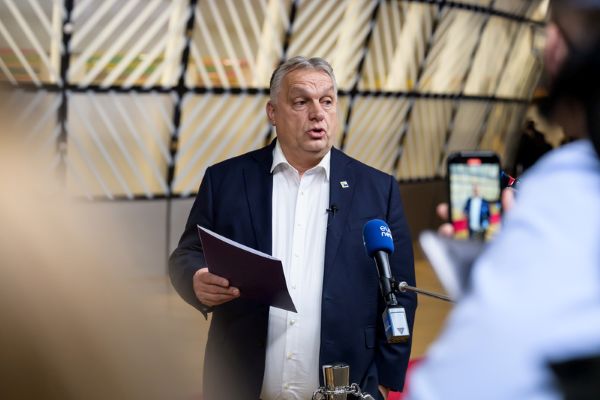
Hungary’s government announced a price cap on gasoline and diesel at fueling stations, effective at midnight local time, Prime Minister Viktor Orbán stated on Monday, 9 March. This decision comes amid rising global oil prices resulting from the ongoing war in Iran.
In a video posted on social media, Orbán explained that “the international oil price explosion has reached Hungary as well.” He declared that the government would set the price of gasoline at 595 forints (approximately €1.55) per litre and the price of diesel at 615 forints (approximately €1.60) per litre. He added that the capped prices would only apply to vehicles with Hungarian license plates and registration documents. To ensure adequate supply, Hungary would also release some of its oil reserves.
Orbán’s authoritarian government is facing a significant challenge from the centre-right Tisza party in next month’s elections. A similar fuel price cap was previously implemented in November 2021, following price surges driven by the COVID-19 pandemic disruptions. This cap remained in effect for over a year before being lifted due to increased consumption and fuel shortages caused by declining imports and production issues.
Earlier on Monday, Orbán, the Kremlin’s closest partner in the EU, urged the European Union to lift all sanctions on Russian fossil fuels to address the energy price increases triggered by the war in Iran. His government has consistently opposed EU efforts to reduce Russian energy imports and, along with neighbouring Slovakia, has maintained and even increased Russian oil and gas supplies since the onset of the full-scale war in Ukraine on 24 February 2022. Both countries received a temporary exemption from an EU policy banning Russian oil imports and had been importing Russian crude through the Druzhba pipeline, which crosses Ukraine. However, oil deliveries through this pipeline have been halted since 27 January, exacerbating tensions between Hungary and Ukraine.
The Ukrainian government claims that a Russian drone strike damaged the pipeline’s infrastructure, while Orbán has accused Ukrainian President Volodymyr Zelenskyy of intentionally delaying oil supplies. In retaliation, Orbán vetoed a new round of EU sanctions against Russia and is blocking a €90 billion EU loan to Ukraine until oil flows resume.
With just a month to go before the election and lagging in the polls, Orbán has accused Zelenskyy of attempting to create an energy crisis in Hungary to influence the vote’s outcome, a claim that is part of his government’s extensive anti-Ukraine media campaign ahead of the ballot on 12 April.
Adding to the tensions, Hungary recently detained seven employees of a Ukrainian state bank. It confiscated two armoured vehicles carrying tens of millions of euros in cash and gold on suspicion of money laundering. Ukraine has insisted that the cash shipment was part of regular operations between state banks and has strongly denied the money laundering accusations.
This article used information from The Associated Press.
