
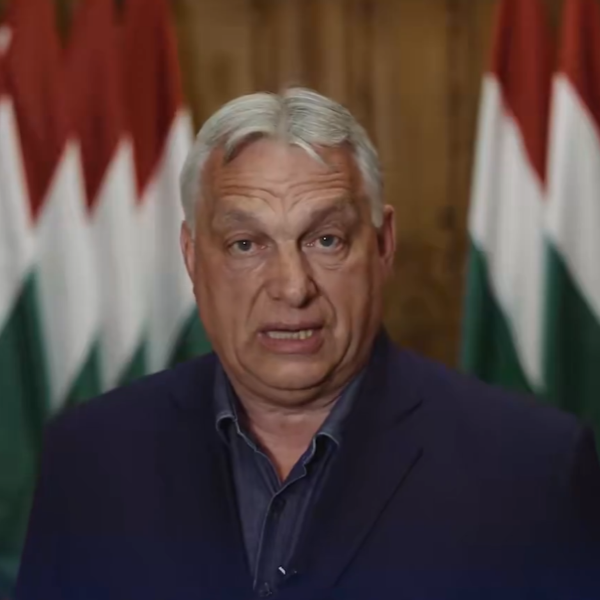
Outgoing Hungarian Prime Minister Viktor Orbán announced on Saturday that he will not take his seat in parliament following a devastating electoral defeat earlier this month. He said he intends to redirect his efforts towards the reconstruction of his nationalist-populist political community.
The Hungarian elections held on 12 April resulted in an overwhelming victory for a centre-right challenger who pledged to confront systemic corruption and restore democratic institutions eroded during Orbán’s 16-year tenure. This challenger, the Tisza party led by the incoming Prime Minister Péter Magyar, achieved a two-thirds majority in parliament, granting the party the authority to reverse many of Orbán’s policies.
In a video shared on social media today, Orbán announced that his party’s caucus in parliament would undergo a “radical transformation” in light of the recent election results, confirming that he will not take up his seat.
Furthermore, shortly before his statement, it was announced that Deputy Prime Minister Zsolt Semjén would also step down, and that János Latorcai and Miklós Soltész had also resigned.
Fidesz’s next steps
The parliamentary faction of Fidesz is set to be established on Monday, under the leadership of Gergely Gulyás. Gulyás, born in 1981, is among the youngest close associates of Viktor Orbán and has served as the Minister of the Prime Minister’s Office since 2018. He has been a member of the National Assembly since 2010 and is known for his nationalist, pro-Kremlin views.
Orbán announced his decision following a meeting of the Fidesz presidency, indicating that discussions regarding the “renewal of the national side” are currently underway. The party is scheduled to conduct a national caucus next week, and the renewal congress, originally planned for the fall, has been rescheduled for June.
Orbán remarked, “I have led our community for nearly four decades. This camp has consistently been the most united and cohesive political community in Hungary.” The Fidesz presidency has proposed that Orbán continue in his role as Fidesz president; should the congress express its confidence in him, he is prepared to assume this responsibility.
Gergely Gulyás, the future leader of the Fidesz faction, recently emphasised the importance of forming a faction that not only represents the renewal of Fidesz but also includes individuals with expertise in policy matters, including those with governmental experience. In addressing the potential for renewal within Fidesz, Gulyás emphasised the need to maintain party unity.
Orbán’s contempt for parliament
The decision to relinquish his parliamentary seat underscores Orbán’s dismissive stance toward the institution and reinforces his authoritarian tendencies. Notably, in his first interview with the far-right outlet Patrióta following the elections, he addressed the need for renewal within his party, specifically indicating a complete restructuring of the Fidesz faction. He remarked, “The individuals who have now entered parliament are not the ones we will need. We elected them to secure victory, but the circumstances have evolved and different representatives are required.” This statement serves as a significant illustration of political amorality and reflects a concerning attitude towards those who supported him during the election campaign.
Moreover, Orbán’s disrespect for the parliament was expressed today during his statement: “Our current task is not in parliament.”
Magyar reaction
Péter Magyar reacted swiftly to the announcement, stating on his Facebook page, “The notorious ‘street fighter’ still cannot do one thing: take responsibility. There is no democratic opposition led by a mafia boss.”
Viktor Orbán has served in the Hungarian Parliament for 36 years since 2 May 1990, and has held the position of Prime Minister for five terms, first from 1998 to 2002. He won four elections as the leader of Fidesz between 2010 and 2026. However, this streak ended on 12 April, when the Tisza party won a two-thirds majority, securing 141 seats in Parliament, while Fidesz-KDNP only obtained 52. The inaugural session is set for 9 May, when Péter Magyar is expected to be sworn in as Prime Minister.
This article used information from The Associated Press.
