
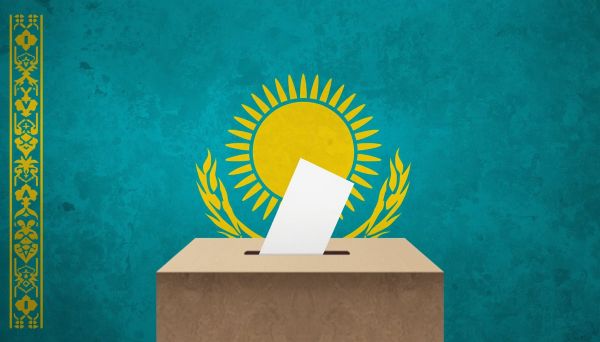
On 23 August, Kazakh voters will choose the 145 members of a new unicameral parliament, the Kurultai. The vote follows a constitutional referendum held in March and the entry into force of the revised constitution on 1 July. The changes introduce a single nationwide constituency using closed-list proportional representation and form part of a broader redesign of Kazakhstan’s institutional architecture, including the replacement of the bicameral parliament by the Kurultai, the reintroduction of the vice-presidency and the creation of the People’s Council.
Observers from the OSCE – including its Parliamentary Assembly and Office for Democratic Institutions and Human Rights, working closely with a delegation from the Parliamentary Assembly of the Council of Europe – will be on hand to assess the electoral process.
The significance of these elections goes well beyond the composition of the next parliament. They will provide the first opportunity to see how the new constitutional and electoral arrangements operate in practice.
The scale and timing of the reforms are themselves important. Much of the constitutional and implementing legislation was adopted within a relatively short period before the elections. Authorities have pointed to earlier consultations and the reform process that began in 2022, while a number of interlocutors have raised questions about the extent of public participation and transparency in developing parts of the new framework. How electoral rules are developed, understood and implemented matters for public confidence in the institutions they create.
The political landscape has also changed. A new party, Adilet, was registered and subsequently merged with the former ruling party, Amanat, becoming the largest contestant. Leadership changes also took place in three other parties shortly before the elections were announced.
In total, seven parties are contesting the election, but it should be remembered that numbers alone do not determine competitiveness. What matters is whether voters are presented with meaningful alternatives and whether different political views can be heard. While the seven parties place different emphasis on socio-economic policy, agriculture, healthcare, education, environmental issues and Kazakhstan’s international role, the campaign will provide an opportunity to observe the extent to which these differences translate into substantive political debate and meaningful choices for voters.
The new system also impacts the relationship between voters, political parties and future parliamentarians. Independent candidacies are no longer possible, and voters choose among closed party lists in a single national constituency. Parties retain considerable discretion over the allocation of parliamentary mandates among candidates on their lists, subject to statutory quota requirements. How this affects the connection between voters and their representatives – and the diversity of voices ultimately represented in the Kurultai – deserves close attention.
Meaningful electoral choice also depends on the information available to voters. Social media is playing an increasingly important role in campaigning and political discussion. At the same time, questions have been raised about state influence in the traditional media sector, restrictions on online content and the working environment for independent journalists. Prior to the campaigning period, there were a series of cyberattacks on media outlets and at least four ongoing criminal cases against journalists, the effect of which could be to contribute to self-censorship and discourage critical reporting.
The overriding challenge is to protect legitimate concerns such as electoral integrity and security without unduly restricting political expression. The remaining campaign will provide an important indication of whether diverse viewpoints can reach voters freely.
On the administrative side, preparations appear to be proceeding on schedule. Election commissions are undergoing nationwide training and voter-education activities are under way. Most interlocutors have expressed confidence in the technical capacity of the election administration, although some have raised questions about the impartiality and independence of lower-level commissions. Transparency in campaign financing will also be important. Revised rules increased contribution and campaign spending limits, while the Central Election Commission is responsible for oversight and publishing financial information during and after the campaign. The extent to which this information enables meaningful scrutiny of campaign spending will merit attention.
Representation is also about who ultimately takes a seat in the new parliament. Women remain substantially under-represented in Kazakhstan’s political institutions. The new framework requires at least 30 per cent cumulative representation of women, young people and persons with disabilities and applies that requirement to the distribution of mandates. The composition of the first Kurultai will therefore show how these provisions translate from candidate lists into actual political representation.
Credible elections also benefit from scrutiny by citizens themselves. Kazakhstan’s legislation provides for domestic observation, and organizations have been accredited at national and regional levels. At the same time, some civil society organizations have reported financial, administrative and legal obstacles to their participation. Independent citizen observation can complement international observation and strengthen public confidence in the process.
Ultimately, elections are not judged by any single element. Efficient administration matters, but so do meaningful political choice, open debate, equal opportunities for contestants, transparent rules and the ability of citizens to participate without undue restriction. Our task is not to prejudge how Kazakhstan’s new system will perform, but to examine the process carefully, impartially and against the commitments that all OSCE participating States, including Kazakhstan, have undertaken. We look forward to engaging with institutions, political parties, civil society, journalists and citizens across the country.
On 23 August, the focus will naturally be on the ballot box – but the significance of these elections will lie equally in the political environment in which those ballots are cast.

Gábor Hajdu and Lucija Tacer Perlin
Gábor Hajdu (MP, Romania) is serving as the OSCE Special Co-ordinator and leader of the short-term observers to the early parliamentary elections in Kazakhstan, and Lucija Tacer Perlin (MP, Slovenia) is serving as Head of the OSCE PA Delegation.
