
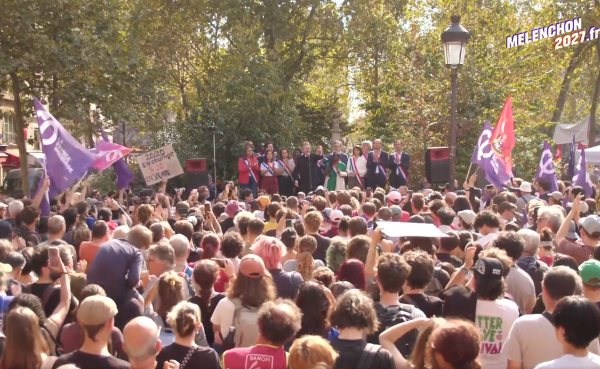
On Thursday, the Prime Minister of France convened a crisis meeting and cancelled ministers’ planned trips to prioritise the response to widespread protests nationwide. These protests, some of which have turned violent, are primarily organised by high school students protesting issues such as under-resourced schools, excessive hours, and other grievances.
The demonstrations began in the Paris region last week and have since expanded significantly, leading to hundreds of arrests during confrontations with protesters. Authorities have reported a considerable number of injuries, with some resulting from projectiles thrown by demonstrators and others, in certain suspected instances, from police riot-control measures.
These protests are emerging as a critical topic within the electoral campaign for the upcoming presidential election, as President Emmanuel Macron is constitutionally ineligible to pursue a third consecutive term. The situation is further intensifying scrutiny on a government already grappling with escalating financial challenges in France.
Left populist presidential candidate Jean-Luc Mélenchon has publicly condemned the government’s approach to handling the protests, labelling it as repressive. Critics of Mélenchon’s party, France Insoumise, have alleged that it seeks to capitalise politically on the unrest and has incited acts of violence.
The office of Prime Minister Sébastien Lecornu said he asked ministers to refrain from any official travel in the coming days, allowing authorities and law enforcement to focus on managing the ongoing demonstrations.
This article used information from The Associated Press.
