
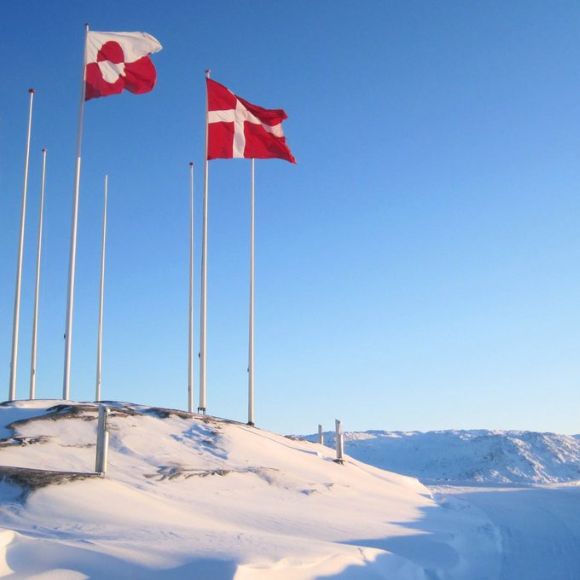
The Committee on Development has recently adopted a comprehensive report concerning the European Union’s relationship with its overseas countries and territories (OCTs). Members of the European Parliament (MEPs) recommended increased funding, along with stronger democratic oversight and scrutiny.
This report amends the EU Council’s decision on the EU-Association of the Overseas Countries and Territories (OCTs), which includes Greenland. It reflects Parliament’s response to a Commission proposal to update the framework in line with the EU’s forthcoming long-term budget.
On 5 October, MEPs voted on this position: 17 in favour, 2 against, and 2 abstentions. This decision, originally adopted by the Council in 2021, covers 13 OCTs, including Greenland.
Speaking after the vote, rapporteur and Committee on Development Chair Barry Andrews (Renew, IE) said: “Given the threats of President Trump to Greenland, we must deepen our relations with the island and make clear that we want, along with all other overseas countries and territories, the closest possible relationship. In various areas such as renewable energy, critical raw materials, research and climate, these countries and territories are crucial partners. Therefore, the Parliament is pushing for increased EU funding and support in line with all our strategic interests.”
The report underscores the goal of strengthening relationships between the EU and the OCTs while recognising increasing geopolitical competition. MEPs emphasise the strategic importance of these territories in regions such as the Caribbean, the Indo-Pacific, the Arctic, the Antarctic, and Oceania.
Moreover, MEPs advocate for greater support to Greenland in addressing key challenges, including threats to its sovereignty, enhancement of educational and skill levels, economic diversification, establishment of reliable connectivity, development of sustainable tourism infrastructure, climate change mitigation, and strengthening the capacity of the Greenlandic administration to formulate and implement national policies. These efforts aim to bolster resilience, self-sufficiency, and the protection of critical infrastructure.
In addition to facilitating the participation of OCTs in various EU funding programs—such as those focused on biodiversity, environmental protection, Horizon Europe, the European Competitiveness Fund, and Erasmus+—MEPs propose increasing the funding allocated for the 2028-2034 budget cycle from €999 million to €2.084 billion (in current prices).
The DOAG should also strengthen the role of civil society and local community groups, particularly those representing youth and indigenous communities, and promote their engagement in activities and projects associated with this framework. MEPs stress the need to involve communities whose lands, resources, and cultural heritage may be affected by investment decisions related to mining, extraction, and exportation of critical raw materials.
Furthermore, MEPs contend that Parliament should be fully represented in the OCTs-EU forum, which they suggest convene annually. They seek to be informed about discussions between the Commission, OCTs, and member states on matters concerning funding, critical infrastructure resilience, maritime security, and other relevant topics related to the DOAG.
Lastly, Parliament retains the right to consultation on these matters, with a vote by the entire Parliament anticipated during the upcoming plenary session scheduled for 11 November.
The 13 Overseas Countries and Territories (OCTs) rely on three member states: six are linked to France, six to the Netherlands, and Greenland to Denmark. Associated with the EU since 1958, the OCTs aim to enhance economic and social development. They have autonomy in areas like economics and health, while member states manage defence and foreign affairs.
On 3 September 2025, the European Commission proposed amending the current association framework for the OCTs with the EU as part of the 2028-2034 financial framework.
