
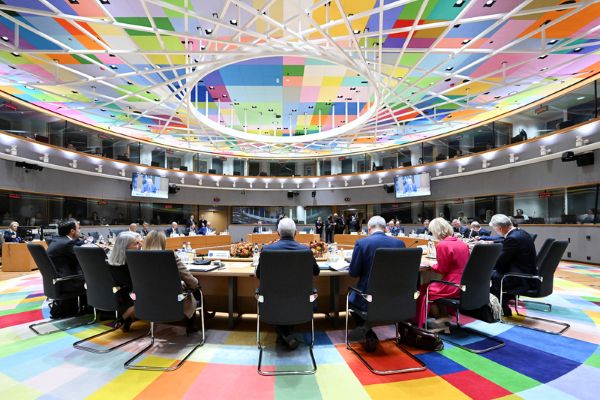
European Union leaders expressed significant concerns on Thursday about a new proposal for the bloc’s long-term budget. This has created substantial uncertainty about whether the bloc can finalise the crucial spending package by year-end.
Swedish Prime Minister Ulf Kristersson articulated that the proposed budget is “far too large and far too expensive.” He emphasised that it would raise Sweden’s net contribution by almost 60%, which he deemed wholly unacceptable.
Sweden is one of approximately ten net contributor countries that contribute more to the EU budget than they receive in allocations. The 2028-2034 budget is projected to fall between 1% and 1.2% of the 27-country bloc’s gross national income. Member states finance the MFF based on the size of their economies, with net contributors accounting for nearly half of the overall contributions.
Europe’s ambitions are challenged
The proposed spending package reflects the European Union’s aspirations and is currently under negotiation as the bloc addresses several external challenges. These challenges include supporting Ukraine in its defence against the Russian invasion and ensuring competitiveness amid elevated energy prices and trade tensions with both the United States and China.
Chancellor Friedrich Merz of Germany, Europe’s largest economy and a significant net contributor to the EU budget, has expressed concerns about the sustainability of the proposed contributions. He said “no member state in the EU can afford to pay contributions to the Union at such a high level” and said he is uncertain whether leaders will reach an agreement soon.
Additionally, Ireland, which holds the EU’s rotating presidency, proposed last weekend setting the budget at €1.62 trillion, a €141 billion reduction from the European Commission’s initial proposal.
Ireland’s proposed plan has drawn substantial criticism from net contributor countries and 17 countries collectively referred to as the “Friends of Cohesion.” These countries advocate preserving farm subsidies and funding for economically disadvantaged regions, which account for about two-thirds of the overall EU budget.
The European Commission, the EU’s executive arm, has also expressed concern about the proposal. EU Budget Commissioner Piotr Serafin remarked on Tuesday, “The proposed cuts risk diminishing our capacity for collective action at a time when, given the current circumstances, greater collaboration is essential.”
“We were never going to please everybody on this one,” Irish Prime Minister Micheál Martin conceded to reporters. “It’s a very difficult balancing exercise.”
EU members racing against time
If countries do not contribute additional funds, Europe will need to cut either agricultural or cohesion spending, or reduce its goals in defence and competitiveness. Time is critical, and with no immediate solutions, European Council President António Costa will replace Ireland in leading negotiations. “We need to deliver by the end of this year,” Costa said, stressing the need to reach an agreement to ensure uninterrupted funding for farmers, workers, and businesses across Europe.
Upcoming elections in France, Italy, Poland, and Spain complicate the situation, as new governments may attempt to change the spending package. Missing the December deadline won’t immediately halt funding, but countries will have a year to adopt spending-programme legislation, with the goal of funds flowing by January 2028. All 27 member countries and the European Parliament must approve the budget. EU leaders will discuss this in late November and again in mid-December.
This article used information from The Associated Press.
