
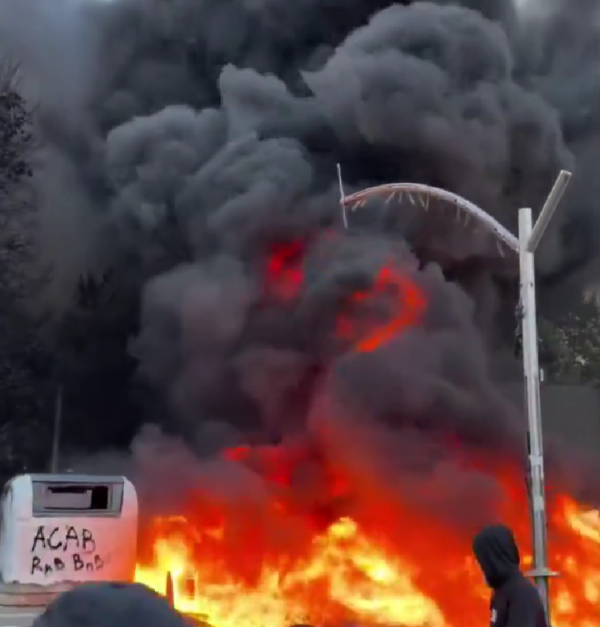
On Thursday, student-led demonstrators clashed with Albanian police in the capital, Tirana, marking the third consecutive day of protests against the government. These demonstrations are part of a broader anti-government movement opposing a major development project linked to Jared Kushner, US President Donald Trump‘s son-in-law.
Protesters expressing discontent with Albania’s long-standing Socialist government clashed with police, hurling rocks at a cordon outside the Education Ministry. In response, riot police deployed tear gas and water cannons, resulting in several demonstrators being detained.
The latest confrontations followed significant riots on Wednesday, during which protesters targeted government buildings, banks, and businesses, leading to 89 injuries, including 61 police officers, as reported by the Health Ministry. The protests, primarily organised by student groups advocating for educational reforms, fall under the umbrella of the so-called Flamingo Movement.
The initiative calls for Prime Minister Edi Rama‘s resignation amid allegations of widespread corruption. It opposes a large luxury tourism development planned for Albania’s southern coast, linked to an investment firm founded by Kushner.
The movement got its name from signs depicting pink flamingos, which inhabit a nature reserve on the island where the development is proposed. On Thursday, high school students joined thousands of other protesters in marches through the capital, chanting “Rama Resign!” and effectively bringing the city to a standstill.
Prominent protest organiser Mateo Yskollari stated online, “We will be in the square every day. Our response to any attempt to silence us will be to expand the protest, engage in civil mobilisation, and demonstrate disobedience.”
While the rallies remained largely peaceful, they escalated into violence when demonstrators confronted police barriers. Some individuals strayed from the main protests to target government buildings and commercial properties.
In response, Prime Minister Rama addressed cleanup crews and issued a video message from a damaged college building. He attributed the incitement of violence to political opponents and committed to remaining in office to further Albania’s aspirations for European Union membership.
“We will all endure these challenging times together as Albania continues to progress towards Europe,” he stated. “No one can undermine Albania’s sovereignty. Anyone who believes they are above the law is mistaken.”
Rama’s Socialist Party won its fourth consecutive electoral victory last year, and Albania’s next parliamentary elections are not expected until 2029. The conservative opposition, represented by the Democratic Party, has supported the student protests and urged the Prime Minister to form a caretaker government ahead of early elections.
“This movement is not merely a protest against the government,” the party emphasised. “It constitutes a revolt against a governmental model established by Edi Rama that has deprived young people of hope, eroded citizens’ trust, and increasingly distanced Albania from its European future.”
A delegation from the European Union in Albania expressed concern about the violent developments during the protests in Tirana and called for a measured response from authorities.
This article used information from The Associated Press.
