
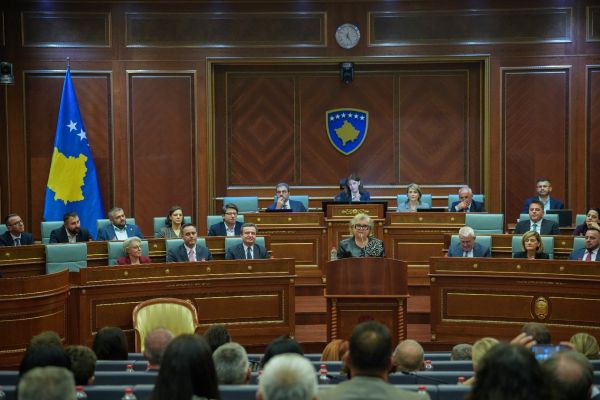
Lawmakers in Kosovo elected economist and academic Justina Shiroka Pula as the country’s new president during a late-night session, just before a constitutional deadline that could have triggered a snap election. The election came against the backdrop of a political crisis lasting more than 19 months, marked by legislative deadlock.
Before Shiroka Pula’s election, legislators approved a law limiting the powers of a special court in The Hague, which investigates war crimes by the Kosovo Liberation Army (KLA) during the 1998-99 war for independence from Serbia.
Shiroka Pula secured 81 votes in the 120-seat parliament and is backed by both the ruling Self-Determination movement and the largest opposition party, the Democratic Party of Kosovo.
While the presidency in Kosovo is largely ceremonial, the officeholder plays a key role in foreign policy and serves as commander-in-chief of the armed forces. In her oath-taking speech, Shiroka Pula stated, “This mandate does not belong to one person alone; it belongs to our citizens and our state.”
Her election follows two weeks of protests over a Hague ruling that convicted four KLA leaders, including former president Hashim Thaci, of war crimes, leading to fears that the verdicts could tarnish Kosovo’s independence struggle, in which over 13,000 people were killed and around 1 million were displaced.
This article used information from The Associated Press.
