
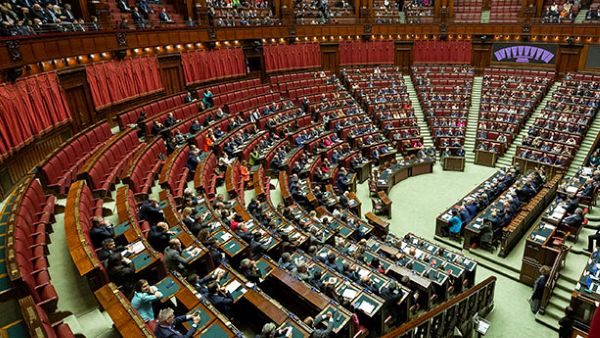
On 17 November, the Italian parliament approved legislation aimed at strengthening the country’s fight against antisemitism, sparking debate over whether it could blur the line between criticism of Israel and anti-Jewish sentiment. The Lower House passed the bill 147 to 93, with five abstentions.
Supporters argue the bill is necessary due to a rise in antisemitic incidents. At the same time, critics believe it may restrict political speech regarding Israel and the Palestinians by incorporating a widely accepted international definition of antisemitism.
This discussion intensified following the 7 October 2023 attack by Hamas and the ensuing conflict in Gaza, which has seen an increase in reported antisemitic incidents across Europe.
The legislation does not create new crimes or penalties but establishes principles for implementing Italy’s existing antisemitism strategy, formally referencing the International Holocaust Remembrance Alliance (IHRA) definition. Supporters, like Mario Venezia from Rome’s Shoah Museum Foundation, insist the bill doesn’t limit criticism of Israeli policies, framing it as a political commitment rather than a punitive measure.
Opponents, including Anneliese Baldaccini from Amnesty International Italy, argue that the law’s reliance on the IHRA definition could suppress legitimate political discourse. Critics prefer the 2021 Jerusalem Declaration on Antisemitism, which aims to differentiate between antisemitism and criticism of Israel.
As antisemitic incidents in Italy reach historically high levels, the CDEC Foundation’s Antisemitism Observatory reported 963 incidents in 2025, a significant increase from prior years. This divide reflects broader international tensions regarding how to address antisemitism while allowing for discourse on Israel. Thousands of entities, including the US State Department, recognise the IHRA definition, although the US Congress has not formally adopted it.
This article used information from The Associated Press.
