
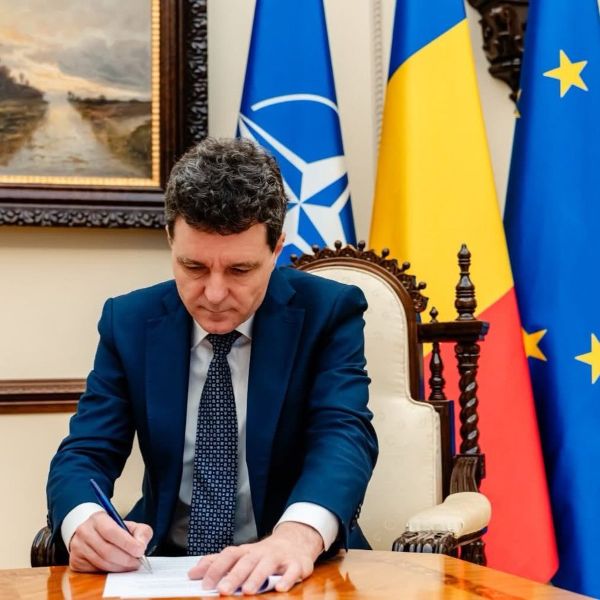
Corruption in Romania is a longstanding issue, rooted in the Communist era, and has recently worsened, affecting sectors such as health care, education, and construction. Since taking office in May, President Nicușor Dan has committed to combating corruption. In a speech on 1 December at Cotroceni Palace, he acknowledged that while life is worse than it was a year ago, it has improved compared to 20 years ago.
“Romania is a corrupt country, and Romanians are right to feel there’s a lack of commitment from the state to fight corruption,” he stated. He pointed out weaknesses in the education and health care systems. However, he noted that the National Recovery and Resilience Fund (NRRP) is starting to deliver results, “as we are seeing the first hospital buildings built with funding from the PNRR.”
Despite the challenges, he praised the private sector for doubling Romania’s GDP over the last decade, although Romania still has a considerable deficit. He highlighted the outdated state administration. Still, he underscored that Romania has built 500 km of highway and expressway in the last 5 years.
The President also said that the large deficit in human resources, represented by the 5 million Romanians who have left Romania, can serve as a calling card and a massive potential for Romania, “if we manage to have a correct relationship with them.”
The President called for balanced discussions about societal issues and emphasised the importance of internal solidarity for national progress.
“I invite you all to continue believing in Romania,” President Dan concluded.
Romanian Intelligence at the forefront of the anti-corruption fight
On 26 November, the Romanian President presented the national defence strategy during a joint plenary session of Parliament, announcing the establishment of a specialised department within the Romanian Intelligence Service (SRI) to combat corruption. This initiative aims to enhance coordination among institutions addressing corruption and emphasises the need to focus on grand corruption.
The President stated, “The strategy involves intelligence services in gathering corruption data while respecting the boundaries of the justice system. We also need to improve the legislative processes that delay corruption trials, which can foster public scepticism about progress.”
He highlighted the importance of the economic sector to national stability and the revitalisation of the National Defence Industry, underscoring the need for effective economic diplomacy. The President expressed optimism about Romania’s upcoming membership in the Organisation for Economic Cooperation and Development (OECD), thanking Parliament for its swift actions to facilitate this.
He concluded by emphasising the need to restore citizen trust, stating that an implementation plan with deadlines and performance indicators will follow this strategy.
Stricter rules in the construction sector
In this context, on 5 December, the President signed a new law to implement stricter regulations in the construction and real estate sectors, aimed at better protecting citizens purchasing homes during the project phase.
The law requires developers to have a recorded building permit and complete the pre-apartment allocation procedure before promising home sales. Additionally, any payments made by buyers must be used only for the purposes specified by law, with non-compliance resulting in a fine of 1% of the developer’s turnover.
These measures are intended to increase confidence in the real estate market and safeguard the interests of investors and families. The law will be published in the Official Gazette next week.
