
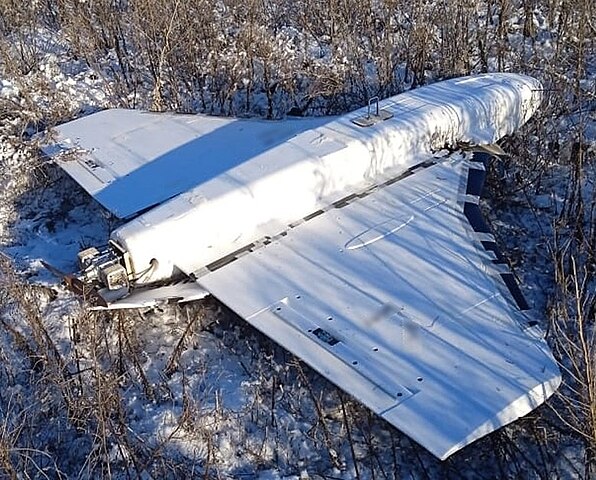
The German government announced on Tuesday that it blames Russia for an attempted drone attack at Leipzig/Halle Airport last month. The drone, loaded with explosives, was discovered near a Ukrainian plane on 4 August and was successfully defused.
German Interior Minister Alexander Dobrindt stated that elements of the drone’s configuration and components are linked to Russian hybrid operations. He noted that while the attack demonstrated a high level of technical expertise, the execution appeared to have been carried out by low-level operatives. Intelligence suggests that these individuals acted on behalf of Russian state entities. The findings collectively indicate Russian responsibility for the attempted attack.
Foreign Minister Johann Wadephul declared that the attempted attack in Leipzig indicates that the Russian leadership is intent on damaging Germany’s already strained bilateral relationship. He announced the closure of the Russian consulate in Bonn effective 18 September and the rescinding of the contract for the Russian House cultural centre in Berlin. Germany will propose adding more Russians to EU sanctions lists due to hybrid attacks, enhance entry controls for Russian nationals, and increase pressure on the “shadow fleet” of tankers suspected of violating sanctions. The Russian ambassador was summoned to the Foreign Ministry in Berlin.
Russian Foreign Ministry spokesperson Maria Zakharova promised a “fitting response” to these actions, describing claims of Russian involvement in the drone attack as a “far-fetched pretext” for escalating tensions, and asserting that no convincing evidence has been provided.
Around 200 incidents blamed on Russia
Leipzig/Halle Airport is a key hub for international freight and supports Ukraine, frequently used by Ukrainian Antonov transport aircraft. It hosts NATO’s Strategic Airlift International Solution (SALIS), which delivers equipment to NATO battle groups along the eastern flank from Finland to Romania.
In 2024, an incendiary device was ignited at the airport’s logistics centre, causing a fire in a freight container before it could be loaded onto a cargo plane. Western officials suspect this incident was organised by Russian intelligence. The Associated Press has recorded around 200 incidents of sabotage attributed to Russia across Europe since the invasion of Ukraine, including warehouse fires, drone launches, and cyberattacks on critical infrastructure.
In response, Russian President Vladimir Putin claimed Moscow is not conducting a sabotage campaign against Europe and challenged the Associated Press to “name one proven fact.”
More EU sanctions on Russia
The European Union has imposed nearly two dozen sanctions packages on Russia due to the war in Ukraine, targeting around 3,000 individuals and entities. EU foreign ministers will meet in Ireland on Wednesday. Following a recent announcement, NATO Secretary-General Mark Rutte expressed solidarity with Germany regarding a Russian attack in Leipzig.
In mid-August, Germany’s Cabinet approved plans to enhance the powers of its intelligence services to address sabotage and hacking, pending parliamentary approval.
Polish Prime Minister Donald Tusk reported new acts of sabotage, including arson, targeting Poland, shortly after a fire at WB Electronics, Europe’s largest drone manufacturer. Prosecutors have launched an investigation into potential foreign intelligence activities against Poland, linking the fire in Skarżysko-Kamienna to damages estimated at 15 million zlotys (approximately €3.46 million).
This article used information from The Associated Press.
