
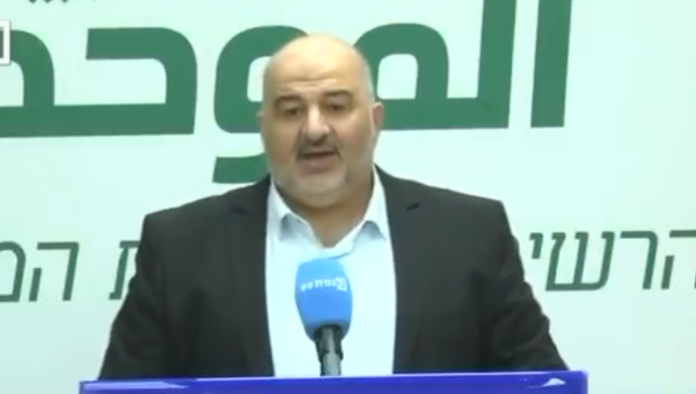
The Arab minority in Israel is backing itself ahead of the new general elections for the country’s parliament on 27 October, with the Arab main parties potentially playing the role of kingmakers.
The two main parties are the Ra’am party, led by Mansour Abbas, and the Joint List of Arab parties, led by Yousef Jabareen. Ra’am and its leader made history in 2021 when, for the first time since Israel’s creation in 1948, an Arab party joined a coalition government. That experience was short-lived: the government collapsed, and in new elections Benjamin Netanyahu and his Likud party returned to power with a more right-wing, nationalistic coalition.
The Arab parties target a minority of Israeli citizens, namely the 20% of the population that didn’t leave after 1948. The Arab minority in the country faces discrimination and misrepresentation. Abbas has tried to run on a platform focused more on local issues, like crime. That was also why he joined the coalition in 2021.
However, they still face big hurdles. At first, Arab-led parties were excluded from the upcoming elections, but a court ruling allowed them back in. Now, they are campaigning but have to steer clear of controversial topics during speeches and are heavily guarded by the Israeli far-right.
After the terrorist attack of 7 October 2023 there was a brief moment of shared solidarity between both sides – there were also several Arab citizens who died in the attacks. However, as Israel ramped up its attacks on Gaza and became more chauvinistic, Arabs have become more of a nuisance than anything, branded as potential terrorists and traitors.
Despite these issues, Arab parties could become crucial in the next elections. The 120-member parliament, known as the Knesset, requires a 61-member majority to govern. However, no single party is likely to reach that milestone, so a coalition government is inevitable.
Both Netanyahu and his main centrist opponent, Gadi Eisenkot, ruled out a coalition with Arab parties, and Eisenkot also publicly ruled out collaborating with Netanyahu. Even the left-wing leader Yair Lapid, who already collaborated with Ra’am in 2021, seemed cold towards a new coalition with them. However, with the political landscape fragmented, some parties may change their tune and ask for at least external support to avoid a stalemate and potential new elections.
This article used information from The Associated Press.
