
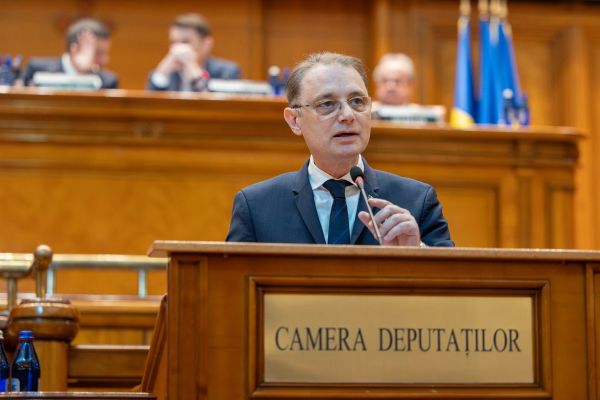
On Tuesday, Romanian lawmakers made a significant step toward resolving a lengthy political impasse by approving a minority government led by independent diplomat Luca Niculescu. He now faces the task of garnering support in a fragmented Parliament while addressing a considerable budget deficit.
Niculescu secured 280 votes for his proposed Cabinet, with 58 votes against it. Following the vote, he remarked, “This is an important moment for Romania. We are emerging from six months of crisis and will begin our work immediately.” He announced plans to convene the first government meeting that evening, stressing that Romania cannot afford further delays.
This vote comes after a challenging period for Romania, a member of both NATO and the European Union and situated on the eastern flank of these organisations. Historically, Romania recorded one of the EU’s highest budget deficits last year. The previous prime minister, Ilie Bolojan, was removed from office in May after a vote of no confidence over strict austerity policies, including tax increases, freezes on public-sector wages and pensions, and cuts to state spending.
Niculescu successfully negotiated support from several political parties for his Cabinet, ensuring backing for at least six months while a more comprehensive political agreement is developed.
During the swearing-in ceremony at Cotroceni Palace in Bucharest, President Nicușor Dan congratulated Niculescu for obtaining sufficient parliamentary approval. He noted, “This demonstrates that he possesses specific skills that will be essential in the forthcoming period.” Dan expressed confidence that Niculescu would navigate the challenges ahead effectively, particularly in his engagements with Parliament.
Cristian Andrei, a political consultant based in Bucharest, commented to The Associated Press that “today’s vote represents a brief interlude in the ongoing political contest within a fragmented Parliament.” He added that the Cabinet’s optimism may be hard to realise given the constraints of a tight budget and limited financial resources. This circumstance will likely increase societal pressure on the Cabinet to deliver tangible results or adopt populist measures.
When the previous coalition assumed power in 2025, Bolojan was sworn in with a mandate to resolve one of Romania’s most severe political crises since the fall of Communism and to address the significant budget deficit. President Dan nominated 55-year-old Niculescu, a seasoned diplomat and former journalist, as prime minister on 5 October, marking his fourth attempt to form a government after three prior nominees failed. The recent parliamentary vote comes weeks after lawmakers rejected a Cabinet proposed by Dan’s third nominee, Siegfried Mureșan, prolonging the political crisis and raising the possibility of early elections amid ongoing regional security concerns related to Russia’s conflict in Ukraine. Romania has also faced a prolonged period of instability following the annulment of a presidential election in December 2024 due to allegations of Russian interference.
This article used information from The Associated Press.
