
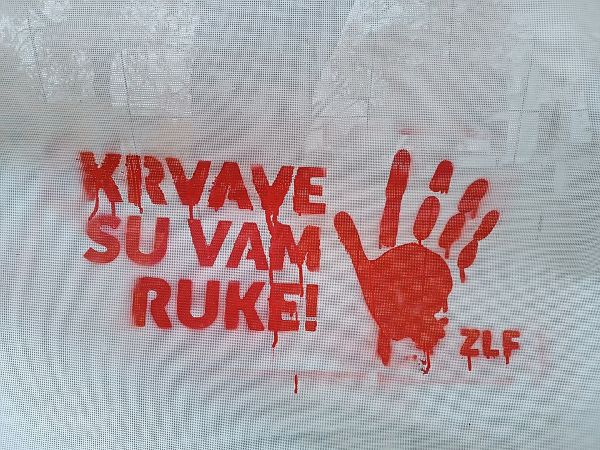
The first session of Serbia’s new Parliament is scheduled for 17 November. This session will be notably influenced by a student-led movement that secured significant electoral success last month. This grassroots initiative has committed to restoring democratic principles and the rule of law while tackling longstanding issues of corruption, cronyism, and alleged connections to organised crime that persisted under former President Aleksandar Vučić‘s rule.
Notably, the new parliament will feature a higher proportion of scientists compared to any other parliament in Europe. However, members will face the challenges posed by the entrenched legacy of a long-ruling authoritarian party. In anticipation of this shift in the political landscape, former President Vučić already describes the emerging democratic environment as a “revolutionary terror regime,” while his party continues to hold power.
Student List leveraged society’s anti-corruption sentiments
On 25 October, the Students’ List group defeated the right-wing Serbian Progressive Party (SNS), led by former authoritarian leader Vučić, in early parliamentary elections. This victory followed two years of anti-corruption protests triggered by a tragic train station roof collapse that killed 16 people in November 2024, which many attributed to systemic corruption.
The Students’ List won 140 of the 250 assembly seats, while the SNS secured 103. The remaining seats went to parties representing ethnic minorities.
Following the elections, Parliament will elect a new speaker and establish other parliamentary bodies, with a new government expected within 90 days. Serbia will also hold an early presidential election by the year’s end after Vučić resigned as president on 27 September.
“To be honest, I do not envy them at all,” said Žarko Korać, who was a deputy prime minister in Serbia’s first democratically elected government after the ouster of nationalist leader Slobodan Milosevic in 2000. The new authorities, Korać said, “will face huge problems.” “I hope they will manage because it will be bad for all of us if they don’t,“ he told The Associated Press.
Restoring democracy: A difficult task
The Students’ List election candidates mainly consisted of professors, teachers, and experts with limited political experience, many of whom hold advanced degrees. They have pledged to restore the rule of law and combat corruption that they claim flourished under President Vučić. Following the election, a wave of arrests involved officials, police officers, and a bank owner accused of embezzlement.
Korać noted that the new officials will start from scratch in both Parliament and the government, and their lack of experience could be both beneficial and challenging as they work to reform the politicised state administration. He emphasised the need for thorough changes in each institution.
The SNS ruled for nearly 14 years and faced accusations of corruption and links to organised crime, which it denies. On 7 November, Vučić told party officials to document what he termed “revolutionary terror,“ asserting that accountability would come in the future.
“It is important to document everything that constitutes acts of revolutionary terror, because one day everyone will be held accountable for it. Don’t think I am joking. Mark my words – you will remember them in two years,“ Vučić stated.
Vučić among his party lawmakers
Aleksandar Vučić will be one of the 103 opposition lawmakers from his SNS party, known for its harsh rhetoric toward political opponents. Following the recent elections, which have not yet officially taken effect, there have been detentions related to suspected election fraud and attacks on student protesters.
Despite promising that his lawmakers will act “decently and civilly,” the party’s reputation remains intact. Recently, a video surfaced of Vučić at the Belgrade bar “Ćaci Bar,” where he threatens prosecutors, police officers, and student activists, stating that everyone will be held accountable.
“Mark my words: everyone will be held accountable. Everyone – from prosecutors and police officers to all those fake student leaders who carry out this kind of terror,“ Vučić says in an interview with Dragan J. Vučićević, editor-in-chief of the media outlet Informer.
“I’m telling them this today, but they can’t do anything about it,“ he adds.
Vučić makes these statements during his regular appearances on loyal media outlets and social networks.
He has suggested that his party may opt not to participate in the upcoming early presidential election to avoid giving the impression that the current situation is normal. Korać has predicted that this rhetoric will continue, while expressing hope that the new authorities will include individuals who possess resilience and strong character.
How to dismantle intelligence agency
Korać, who took office in 2000 after Slobodan Milošević, faced a war-torn country that had been bombed by NATO the previous year. He criticised how systems are designed to favour those in power over citizens. Under Prime Minister Zoran Đinđić, the post-Milošević government aimed to end Serbia’s international isolation and revive the economy. However, democracy faltered as the ruling coalition split, and Đinđić was assassinated in 2003.
Now, more than two decades later, Serbia’s EU bid has stalled due to democratic backsliding under Vučić, who has consolidated power since 2012. Korać has called for dismantling the state spy agency amid accusations that it has extensively surveilled Vučić’s critics.
The Security Information Agency (BIA) denied these claims, describing them as “malicious” attempts to create instability. Allegedly monitored individuals include the rector of Belgrade University, students, an opposition politician, and journalists from the Radar weekly.
Student representatives meet foreign officials
Student representatives are focusing on domestic issues while also making international contacts. Earlier this month, a delegation from the Students’ List met with European Union officials. Last week, they spoke with US Assistant Secretary of State Brendan Hanrahan and Russian ambassador to Serbia Alexander Botsan-Kharchenko.
Serbia’s future government is not expected to prioritise foreign relations right away. The country is seeking EU membership without imposing sanctions on Russia and relies on it for energy. Vučić has also built strong ties with China.
After talks in Brussels, EU Enlargement Commissioner Marta Kos said the EU is ready to support the new government in implementing necessary rule-of-law reforms. Hanrahan confirmed the US is prepared to collaborate with Serbia on shared goals of regional security and economic cooperation.
Additionally, the US Bureau of International Narcotics and Law Enforcement Affairs joined the meeting with the student movement, highlighting their joint efforts against organised crime in Serbia.
This article used information from The Associated Press.
